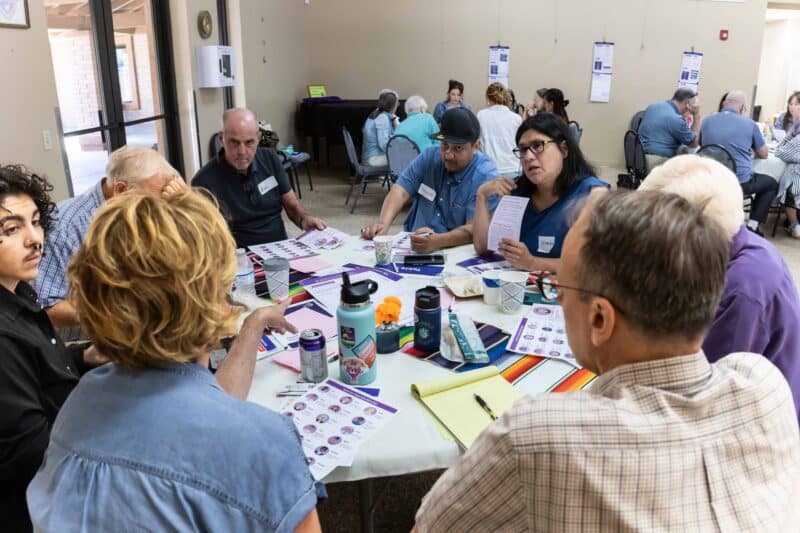
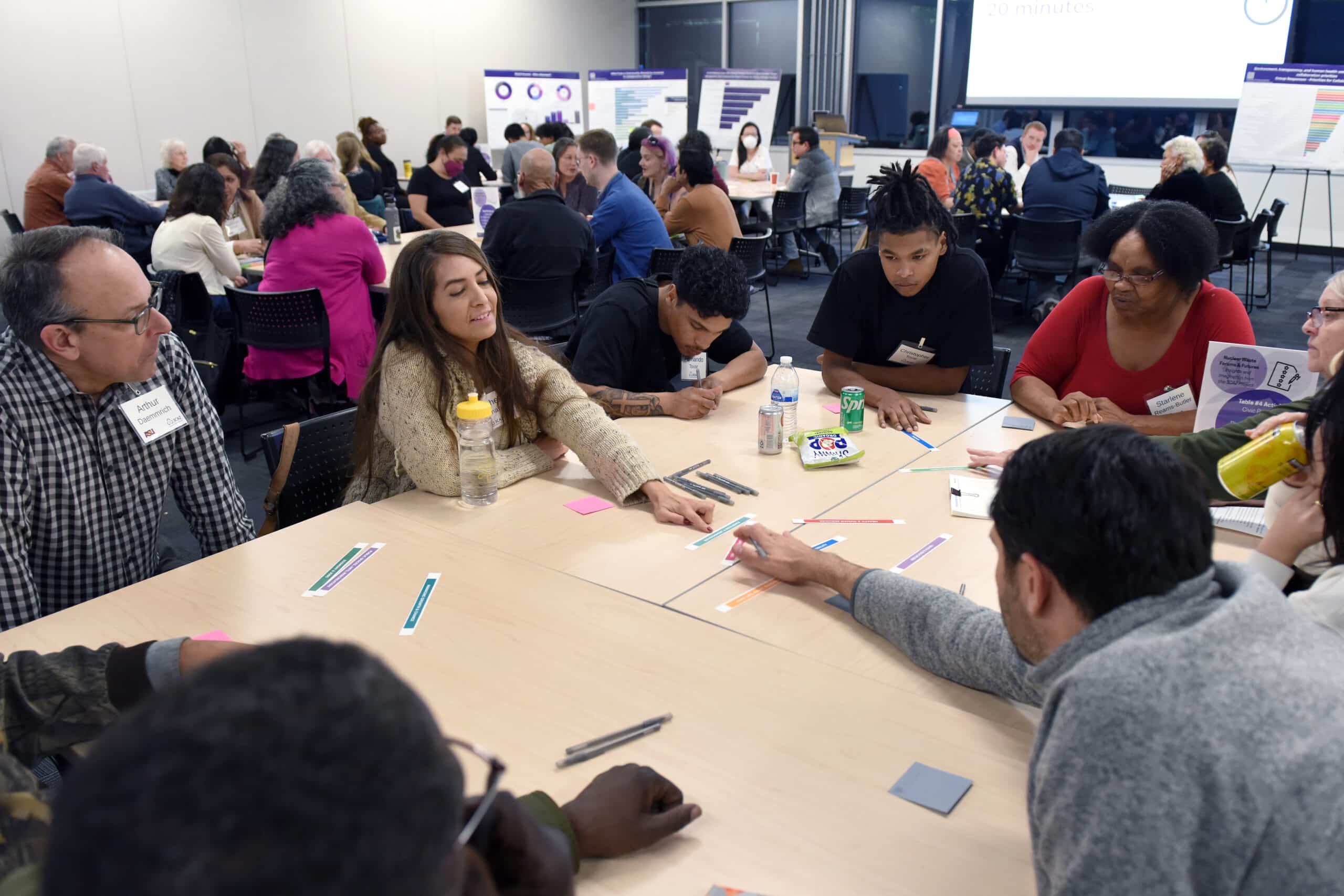
On January 13, our project team, partners, and folks who attended our community dialogues and forums gathered at ASU Skysong for an afternoon and evening exploring the insights and imagination emerging from the 3CAZ project. Seventy-two people from across Arizona joined us for a program that bridged analysis and imagination, data and dialogue, and science and storytelling.
An Afternoon of Learning
The afternoon session began with an introduction to the 3CAZ project, followed by a demonstration of our forum activities. Participants watched excerpts from the videos used in our community forums and experienced a shortened version of one of our key activities: identifying priorities for collaboration between communities and the U.S. Department of Energy on nuclear waste management.
We then presented an overview of results from the forums we held across Arizona in 2025, sharing what we’ve learned from hundreds of community members in Parker, Flagstaff, Phoenix, Yuma, Sahuarita, and youth forums in Tempe. This overview sparked rich discussions about patterns emerging from the data and what these conversations reveal about how Arizonans think about nuclear waste, community decision-making, and collaborative processes.
An Evening of Imagination and Engagement
After a break, the evening session welcomed a broader audience. Participants enjoyed dinner while exploring poster displays featuring forum results, citizen science kits, and library dialogue tools.
The evening included a panel discussion on Our Radioactive Neighbors: Collaborative Imagination, Community Futures, and Nuclear Siting Practices. The book brings together speculative fiction stories, visual art, and essays by experts to help communities consider the complexities and decisions around the potential siting of nuclear waste storage facilities. Panelists Clark Miller, Jennifer Richter, Alycia de Mesa, and Andrew Dana Hudson discussed the development of the book and how fiction and nonfiction can work together to support community deliberation about complex issues.
Following the panel, we shared additional results from our forums before participants dove into small-group activities at facilitated tables. These activities gave forum participants a chance to further discuss the book, dive into the forum results, and discuss other (non nuclear) civic priorities that emerged from our forums and dialogues.
During these small-group discussions, we heard several important themes emerge about what you want policymakers and the Department of Energy to understand from this project. The group emphasized the importance of transparency and open conversations with the public, with many highlighting that environmental and health concerns remain central to community members. You shared that this work represents an opportunity to create a positive track record for working with communities, and stressed the vital importance of regular community gatherings, forums, and opportunities for discussion and learning. Many of you called for meaningful collaboration with Tribal governments to ensure they are involved and heard, and urged decision-makers to involve more than just elected leaders in decision-making processes. Throughout these conversations, the focus on future generations remained a guiding concern.
What’s Next
To everyone who joined us on January 13—whether you participated in one of our forums, contributed your expertise to the project, or simply brought your curiosity and thoughtfulness to Skysong—thank you. Your engagement is at the heart of this work.
Stay tuned for more results and resources as we continue to analyze and share what we’ve learned through this project. We plan to reorganize this website to highlight what we found from the forums, share the forum materials and other resources developed through the project, and provide commentary and updates on important nuclear waste management and siting issues.
We invite you to download Our Radioactive Neighbors, the book of speculative fiction, essays, and art that our friends at the Center for Science and the Imagination published as part of this project. You can get a copy for free in a variety of digital formats, read the HTML version online, or buy a print-on-demand copy. At that same link, you can find an accompanying facilitation guide with activities, discussion questions, and other resources, designed to help people to use the book in community settings and deliberations.